
Key Takeaways
- Read the label as one part of a documentation set: compare it with the lot-specific Certificate of Analysis, supplier records, and any applicable safety information.
- Confirm the substance name, stated quantity and unit, lot or batch identifier, date information, storage statement, and research-use wording before matching accessories.
- A CAS Registry Number identifies a substance, but it does not prove grade, purity, lot identity, or suitability for a project.
- A purity value needs its test method and reporting basis. Do not automatically multiply the printed vial quantity by the purity percentage.
- ISO/IEC 17025 describes laboratory competence and consistent operation; it is not a blanket certification of every product tested by a laboratory.
- A compound label does not establish cartridge fit, pen-model compatibility, or component specifications. Verify those details in the accessory documentation.
- PeppiPens provides non-medical accessory support only. This guide does not provide drug-use, dosing, route, administration, treatment, efficacy, or personal-use instructions.
A research compound label should answer a few basic documentation questions: what substance is identified, what quantity and unit are stated, which lot produced it, which dates and storage statement apply, and which records belong to that lot. It should not be used as a substitute for a Certificate of Analysis, a safety document, or the separate compatibility specifications for a precision pen and cartridge.
This guide explains how to read common label fields without turning them into compound-use instructions. The practical goal is to create an accurate record before you compare non-medical pen accessories.
Why Label Reading Comes Before Accessory Matching
A short label can contain several kinds of information at once: chemical identity, mass, supplier tracking, analytical shorthand, dates, and intended-use language. Recording those fields exactly reduces transcription errors and gives you a clean reference when reviewing other documents.
That record still does not select hardware for you. The PeppiPens Accessory Support Library organizes the accessory side of the process, while the needle and cartridge compatibility guide explains which product specifications should be compared. Keep the two document sets separate.
Label, COA, Safety Record, and Accessory Guide: Different Jobs
| Document | Primary job | What it does not prove by itself |
|---|---|---|
| Container label | Identifies the container and states supplier-selected fields | Full analytical evidence or accessory compatibility |
| Certificate of Analysis (COA) | Reports tests, methods, specifications, and results for an identified sample or lot | That it belongs to your container unless the lot matches |
| Safety Data Sheet or applicable safety record | Communicates classified hazards and precautions where required | Purity, accessory fit, or project suitability |
| Accessory product guide | States cartridge capacity, dimensions, connections, and model compatibility | Compound identity or analytical quality |
OSHA notes that incoming labels on hazardous-chemical containers should not be removed or defaced and that laboratories should keep the accompanying safety data available. Its interpretation also makes clear that laboratory labeling obligations depend on the applicable standard and the laboratory’s own Chemical Hygiene Plan. That is a useful reminder not to treat one universal label template as correct for every setting. See the OSHA laboratory-labeling interpretation.
The Main Fields on a Research Compound Label
Substance name and aliases
Start with the exact printed name. A substance may be described by a systematic name, common name, shorthand, salt form, or other alias. Similar-looking names are not automatically interchangeable. Copy punctuation, suffixes, and salt or complex information exactly, then compare them with the matching supplier record.
CAS Registry Number
A CAS Registry Number (CAS RN) is a unique identifier assigned to a specific chemical substance. CAS explains that the identifier reduces ambiguity when a substance has multiple systematic, common, generic, or trade names. It is useful for identity cross-checking, but it says nothing on its own about the grade, purity, source, or lot in your hand. Read the CAS explanation of Registry Numbers.
Stated quantity and unit
The printed quantity describes what the supplier states is in the container. Mass may appear in milligrams (mg) or micrograms (mcg or the symbol µg). A milligram is one-thousandth of a gram; a microgram is one-millionth of a gram, so 1 mg equals 1,000 mcg. NIST’s SI mass-unit reference provides the metric framework.
A mass such as “5 mg” is not the same kind of value as “5 mg/mL.” The latter is a concentration because it includes a volume denominator. If the label gives only mass, do not invent a volume, concentration, solvent, or procedure from that number.
Lot or batch identifier
A lot number or batch number connects a container with the supplier’s production and testing records. The code may be numeric, alphabetic, or mixed. Its format matters less than the match: the identifier on the COA should agree exactly with the one on the label.
Save a clear image or transcription of the original label with the lot-specific records. If a report has no lot identifier, or carries a different one, it is not evidence for that particular container until the supplier resolves the mismatch.
Purity, assay, and test method
Purity is not a self-explanatory number. A result may come from HPLC area percentage, mass balance, peptide-content testing, or another defined method. Counterions, residual water, salts, and other material can be handled differently depending on the reporting basis. The exact method and basis belong on the COA or method record.
For that reason, avoid the common shortcut of multiplying the stated vial quantity by the purity percentage. That calculation may be wrong when the nominal quantity and analytical percentage use different bases. Record both fields and rely on the supplier’s explicit documentation.
Manufacture, retest, expiry, or best-before date
These labels are not interchangeable. A manufacture date records production timing. A retest date can indicate when material should be reassessed under the supplier’s quality system. An expiry or best-before date reflects the supplier’s stated period under defined conditions. Use the exact term printed, and never add a universal shelf life that the supplier did not document.
Storage statement
Copy the storage statement exactly, including any temperature range, light protection, moisture control, or packaging condition. Do not replace a specific supplier statement with a broad rule found on another product page. If the label and supplier record disagree, pause and request clarification.
Research-use wording
A statement such as “for research use only” sets an intended-use boundary. It is not an analytical result and does not certify identity, purity, sterility, stability, or compatibility. PeppiPens regards that wording as a boundary marker, not a quality badge.
How to Read a Certificate of Analysis Without Overreading It
A COA is most useful when it identifies the tested sample, lot, test method, acceptance criterion, result, test date, and issuing laboratory. Confirm that the compound name and lot match your label before evaluating the result.
If the report cites ISO/IEC 17025 accreditation, interpret that claim narrowly. ISO describes ISO/IEC 17025 as the international standard covering competence, impartiality, and consistent operation of testing and calibration laboratories. Accreditation can strengthen confidence in a laboratory’s defined scope, but it does not transform every report into proof for every lot or every test. Check the laboratory identity, accreditation scope, method, result, and lot match.
What the Compound Label Cannot Tell You About a Precision Pen
A compound label normally does not state the cartridge’s external dimensions, connection type, stopper design, pen-body fit, compatible needle interface, or a pen’s mechanical increment. Those are hardware specifications. Use the 3 mL cartridge guide and the live accessory listing instead of guessing from the vial.
Likewise, a label does not authorize a calculation or project protocol. PeppiPens maintains separate documentation for mass and volume terminology, cartridge-volume specifications, and the concentration calculator’s assumptions. Those resources explain terms and accessory inputs; they are not personal-use directions.
A Documentation-First Accessory Checklist
- Photograph or transcribe the complete original label before separating it from its packaging.
- Record the exact substance name, form or complex, quantity, unit, lot, dates, storage statement, and intended-use wording.
- Match the lot against the COA; note the analytical method and reporting basis rather than copying only the headline percentage.
- Keep any applicable safety information with the same project record.
- Open the accessory documentation separately and compare pen model, cartridge capacity, dimensions, and listed compatibility.
- Resolve missing or conflicting information with the relevant supplier. Do not fill gaps with assumptions from another compound or accessory.
Common Research Label Reading Mistakes
| Mistake | Why it fails | Better check |
|---|---|---|
| Treating mg as mg/mL | Mass and concentration are different quantities | Copy the unit and denominator exactly |
| Using an alias without confirming the exact form | Names can refer to different salts, complexes, or substances | Cross-check the full name and CAS RN where provided |
| Accepting a generic COA | It may not represent the container’s lot | Require an exact lot match |
| Multiplying quantity by purity automatically | Quantity and analytical percentage may use different bases | Read the method and reporting basis |
| Assuming “research use only” proves quality | Intended use is not an analytical result | Review identity, lot, method, and result separately |
| Inferring cartridge fit from the compound label | The label is not a hardware specification | Use the pen and cartridge compatibility records |
Frequently Asked Questions About Research Compound Labels
What should I check first on a research compound label?
Start with the exact substance name, stated quantity and unit, lot or batch identifier, date information, storage statement, and research-use wording. Then compare those fields with the supplier documentation for that same lot.
Is a vial quantity in mg the same as a concentration in mg/mL?
No. A quantity such as 5 mg describes a stated mass. A concentration such as 5 mg/mL describes mass per volume. Do not treat one as the other or infer a concentration from the label alone.
What is the difference between mg and mcg?
A milligram is one-thousandth of a gram, while a microgram is one-millionth of a gram. Therefore, 1 mg equals 1,000 mcg. Read the printed unit exactly rather than relying on the number alone.
What does a CAS Registry Number tell me?
A CAS Registry Number is a unique identifier for a specific chemical substance. It helps distinguish substances that may have several names, but it does not by itself prove grade, purity, lot identity, or suitability for a project.
What is a lot or batch number?
It is the supplier or manufacturer identifier assigned to a production batch. Use it to match the container with lot-specific records, especially the Certificate of Analysis, rather than with a generic example report.
What does purity percentage mean on a research label?
It is a reported analytical result or specification whose meaning depends on the test method and reporting basis. Check the matching Certificate of Analysis; do not automatically multiply the stated vial quantity by the percentage.
Does an ISO/IEC 17025 reference prove a compound is high quality?
No. ISO/IEC 17025 addresses the competence, impartiality, and consistent operation of testing and calibration laboratories. You still need the exact report, lot match, method, result, and laboratory identity.
Is a research-use-only statement a quality certification?
No. It states an intended-use boundary. It does not independently establish identity, purity, sterility, stability, or accessory compatibility.
Does the label tell me which cartridge fits my precision pen?
Usually not. Cartridge fit depends on the accessory specifications for the pen and cartridge. Check the PeppiPens compatibility and 3 mL cartridge guides instead of inferring fit from the compound label.
Can I rely on a generic Certificate of Analysis?
A generic or example report cannot verify a specific container. For traceability, the report should identify the same lot or batch shown on the label and state the relevant method and result.
What should I do if the label and documentation disagree?
Pause the project and ask the supplier to reconcile the discrepancy in writing. Do not guess which name, unit, lot, date, storage condition, or result is correct.
How does a compound label connect to pen accessory planning?
It provides documentation fields to record before you compare compatible hardware. The label does not replace the separate cartridge-capacity, pen-model, and component-compatibility specifications supplied for the accessories.
Match Documentation Before You Match Accessories
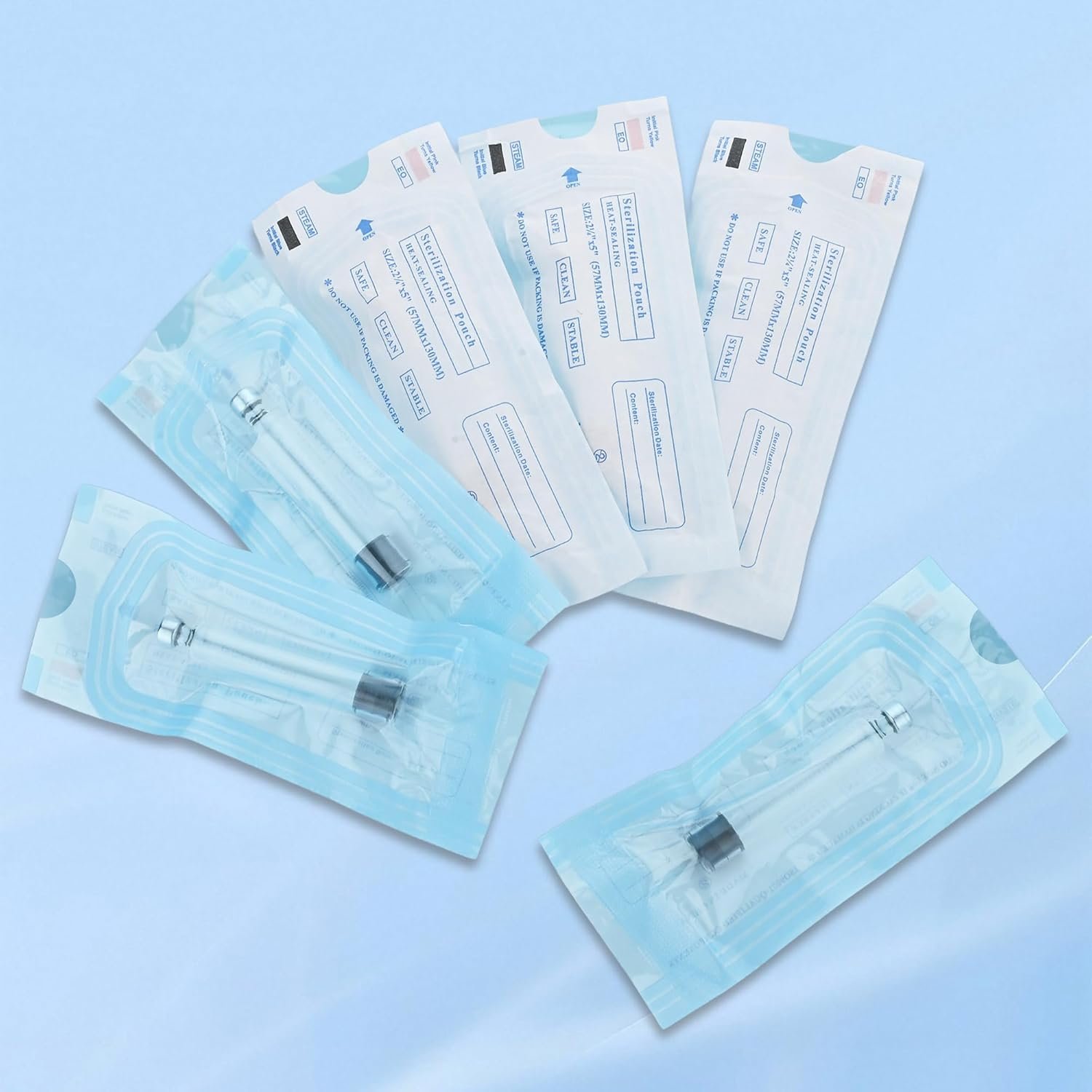
Once your label and lot-specific records are organized, move to the hardware documentation. Review the Sterile 3 mL Cartridges — 20 Pack listing for the exact product shown here, or browse the current cartridge category. Confirm the live product details and pen-model compatibility before ordering.
Accessory-support boundary: PeppiPens products are non-medical research accessories. This article explains documentation fields and accessory-specification checks only. It does not provide drug-use, injection, dosing, route, administration, treatment, efficacy, reconstitution, solvent, or personal-use guidance.